

Interior decor Tudor style
What we might learn from the fashion for wall hangings

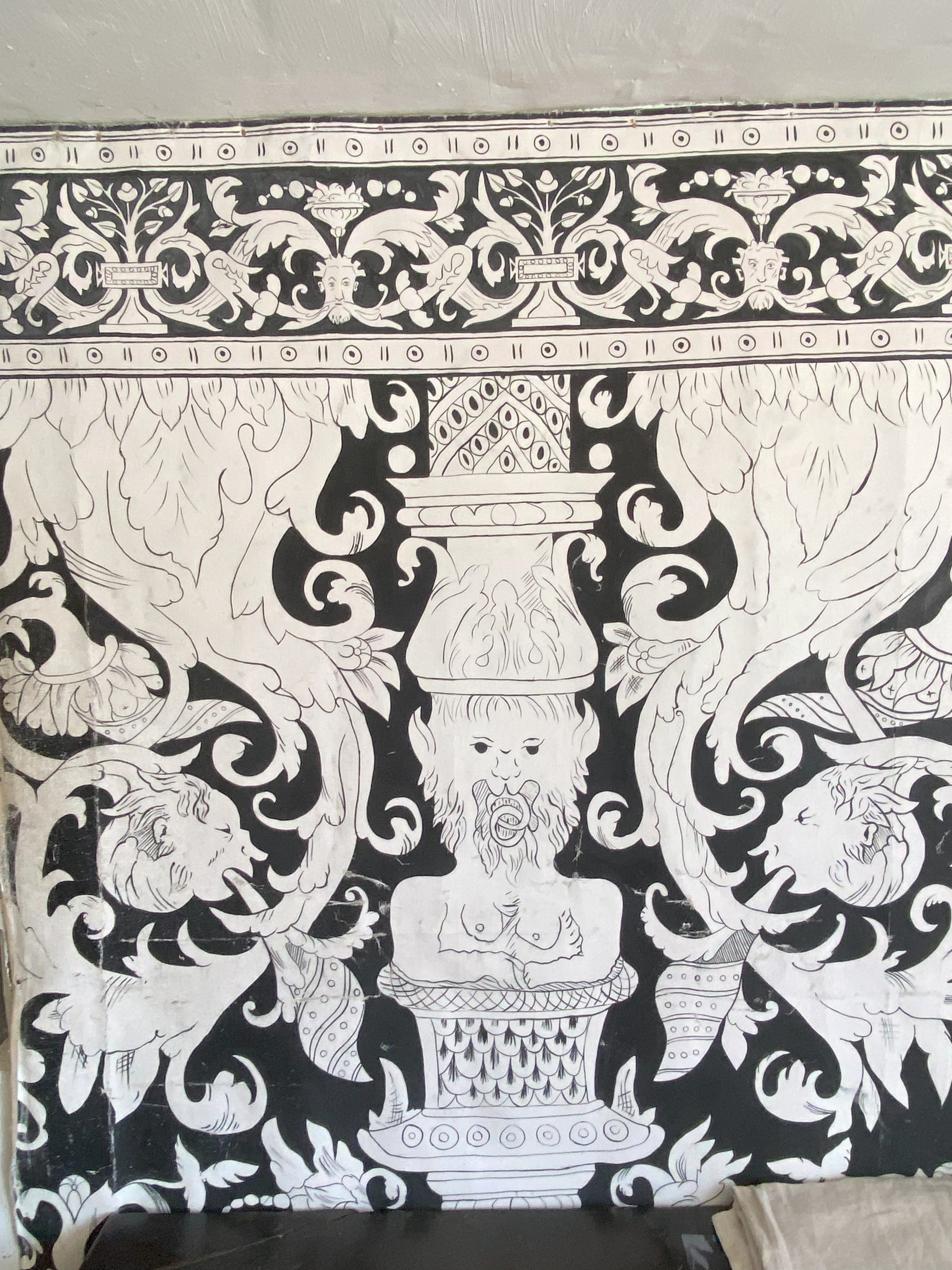
Imagine being able to change the look of your room by taking down the wallcoverings, or swapping them with another set. Just think how much easier it would be to conquer the damp by washing some fabric rather than scrubbing, sealing and painting your walls (and yes, I’m really feeling this one)! I love the whole concept of a removable, washable wallcovering. Just think of the possibilities of being able to change the feel of a room by swapping out your set of hangings, or making a room really cosy by encasing it all in one look - a bit like the current social media trend for ‘colour soaking’ a room by painting the ceilings and woodwork the same colour.
In case you think I’m dreaming up a new fashion, I’m not. I’m stealing a very old idea that dates back hundreds of years and was a way to keep your wattle and daub house bang up to date whilst battling the draughts and damp that come with our British climate.
I discovered this over the summer when we visited Stratford-upon-Avon and as tourists inevitably ended up in Shakespeare’s childhood home.
I was already pretty excited by all the greenware pottery - those who have read my mudlarking posts know I’ve collected a lot of shards of that, and it was nice to see what it might look like in one piece.
However, the completely new thing I learned was the wall hangings in the upper floors. We regularly see the tapestries that hung in castles and manor houses and they would have been expensive and needed a lot of care. Until this visit I assumed wall hangings were for the rich. This was the first time I learned that the middle classes also hung fabrics on their walls - and not only were they decorative but they were incredibly practical too. My immediate thought was that they would get wet and moldy, but these were no ordinary pieces of fabric - they were waxed to make them resistant to mildew and easy to take down and wash.
Mind blown.
In fact they were very similar to the waxed sheets we can buy now to wrap food rather than using the less environmentally friendly cling film - but obviously a lot bigger.
They think they also doubled as window hangings keeping out the drafts whilst maintaining the aesthetic of the room. The guides suggestion was that they were nailed up or held over windows by strings.
Although it was cheaper to buy and hang this printed waxed fabric than a hand sewn tapestry, it was not within everyone’s budget, so it was a social statement that a glovemaker (Shakespeare senior) had a comfortable living. The value of these wallcoverings is also shown by fact that they were often mentioned in wills as being an asset to pass to family.
This replica hanging in the picture at the start of this post is called Italian Grotesque and the image is taken from an original image still on the walls of a Pizza Express, in Oxford. The glass covered image there has been preserved stuck to the wall rather than as a hanging.
Back in Stratford, I imagine having an Italian inspired wall might have had some impact on young William and made him think of faraway Italy. There are those that suggest the images also came through in later plays with some of the fantastical characters and although we’ll never know I think an imaginative child would be affected by waking up to the image above!
You can still buy Italian Grotesque wallpaper - though not this exact image - for a large sum of money. Personally I’d go for something less nightmare inducing, although the idea of washable hangings is appealing as a way to deal with the endless battle with damp and with washing machines becomes even easier to wash.
If this takes off as a ‘thing’ you can say I called it here first!
I’ll be putting my images of Shakespeare’s house on the Reading Riddle instagram and Pinterest if you want to browse though the pictures in more detail and next week I’ll be catching up with my mudlarking adventures.